
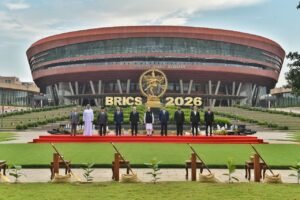



We strongly condemn terrorist attacks : BRICS Leaders Xiamen Declaration
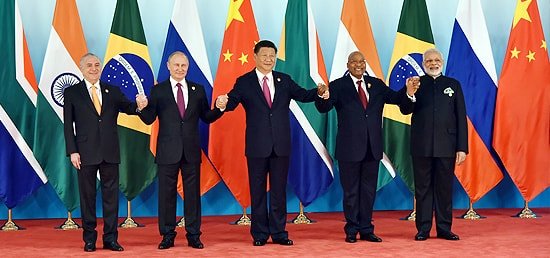
” We strongly condemn terrorist attacks resulting in death to innocent Afghan nationals. We, in this regard, express concern on the security situation in the region and violence caused by the Taliban, ISIL/DAISH, Al Qaida and its affiliates including Eastern Turkistan Islamic Movement, Islamic Movement of Uzbekistan, the Haqqani network, Lashkar-e-Taiba, Jaish-e-Mohammed, TTP and Hizb […]
We can no longer be silent about Pakistan’s safe havens : Trump
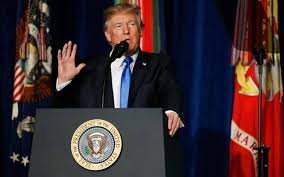
We can no longer be silent about Pakistan’s safe havens, 9/11, the worst terrorist attack in our history, was planned and directed from Afghanistan because that country was ruled by a government that gave comfort and shelter to terrorists,Pakistan will have to change, A hasty withdrawal of army would create a vacuum for terrorists, including ISIS and Al Qaeda, would instantly fill just as happened before Sept. 11.Pakistan will have to change ,the country receives billions in US aid but continues to harbour militants.We can no longer be silent about Pakistan’s safe havens for terrorist organizations, the Taliban and other groups that pose a threat to the region and beyond.The Pakistani people have suffered greatly from terrorism and extremism.
Is the GCC Crisis De-escalating?
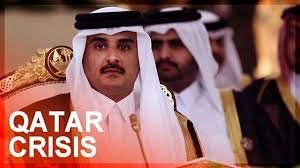
Saudi Arabia, United Arab Emirates (UAE), Bahrain, and Egypt had listed 13 demands on June 23, 2017, warning that there would be serious consequences if Qatar failed to yield by July 2.1 Qatar rejected the ultimatum and the four countries have not yet carried out their threats. Instead, they have softened their stand, vaguely signaling that it might be enough if Qatar were to accede to ‘Six Principles’. In short, there has been no escalation and we can clearly see a degree of de-escalation.
Rising India & Rising China: A medium-term projection
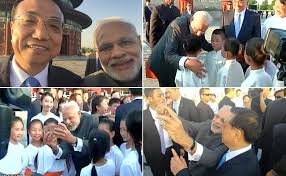
As two major countries in the Asian region in terms of population, territory, higher economic growth rates and growing aspirations, the role of India and China vis-à-vis each other, and at the regional and global levels, is significant. Medium-term prospects of these two countries point towards relative enhancement in their respective comprehensive national strengths, gradual vanishing of “buffer zones” that existed between the two in the Asian region and a coalescing equation so far conditioned by the “cooperation and competition” dyad. Nevertheless, overall stability in the political relations can be expected between the two Asian powers in the medium term.
Unlike in the past, India is also leveraging a wide variety of diplomatic and strategic partnerships with the US, Japan, Singapore and Vietnam at a time when Beijing is trying to expand its appeal through One Belt, One Road project and cobbling up semi-military alliances with Pakistan and others. At the ideological level, a rising India is increasingly speaking about its democratic experiment as a possible model for others to adopt.Traditionally, this has been a contentious – if not made explicit – issue between India and China in their appeal to Asian, African and South American continents. Thus, the stakes are expected to be high for India’s relations with China in the medium to long-term.
The Malabar Exercises: An Appraisal
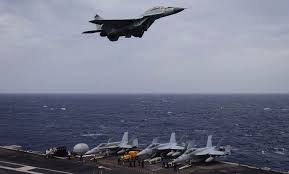
The 21st edition of the Malabar exercises, Malabar-17, was conducted in the Bay of Bengal from July 10 to 17, 2017. The primary aim of the exercise was to increase interoperability amongst the navies of India, Japan and the US as well as develop a common understanding and procedures for maritime security operations. The exercise is a demonstration of the joint commitment of all three nations to address common maritime challenges across the spectrum of operations and will go a long way in enhancing maritime security in the Indo-Pacific region for the benefit of the global maritime community.
The Indo-Pacific region holds immense geo-political and geo-strategic significance for navies around the world. The challenges of piracy, maritime terrorism, organised crime like drug trafficking, weapons smuggling, trafficking of weapons of mass destruction (WMD) and related material, all have forced navies to conduct joint patrols and provide escort duties for shipping assets. In conjunction with these non-conventional challenges, the challenge to freedom of navigation in the South China Sea, unrelenting firing of missiles by North Korea and apprehension of non-accessibility of crucial choke points have elicited varying responses from the stake holders. It has become imperative for navies to cooperate with each other, ensure interoperability and position maritime assets to ensure peace and stability. Over a period of time, naval exercises between like-minded nations have become a viable mechanism to practice drills in a simulated setting in order to eliminate functional gaps that may lead to insecurities.
Recognising terrorism poses a grave threat to global peace and stability:Modi in the joint press statement with Israel PM Benjamin Netanyahu
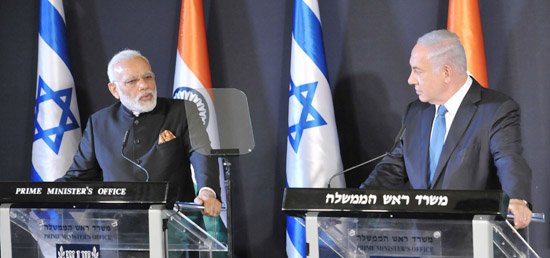
Marking the 25th anniversary of the establishment of diplomatic relations between the two countries, Prime Minister Narendra Modi of India visited Israel from 4-6 July 2017 at the invitation of Prime Minister Benjamin Netanyahu of Israel. This historic first-ever visit by an Indian Prime Minister to Israel solidified the enduring friendship between their peoples and raised the bilateral relationship to that of a strategic partnership.
Two sets of relics from Kerala :PM’s gift to PM Benjamin Netanyahu
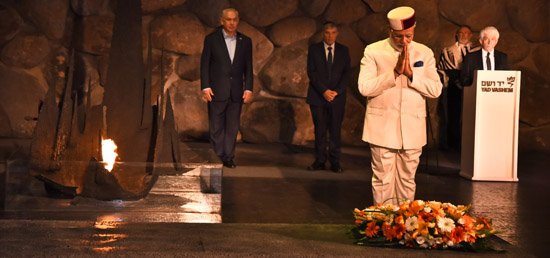
The Prime Minister Narendra Modi presented Prime Minister of Israel Mr. Benjamin Netanyahu replicas of 2 sets of relics from Kerala that are regarded as key artifacts in the long Jewish history in India.
They comprise two different sets of copper plates that are believed to have been inscribed in 9-10th century C.E.
The first set of copper plates is a cherished relic for the Cochini Jews in India. It is regarded as a charter describing the grant of hereditary royal privileges and prerogatives by the Hindu King, Cheraman Perumal (often identified as Bhaskara Ravi Varma) to the Jewish leader Joseph Rabban. According to traditional Jewish accounts, Joseph Rabban was later crowned as the Prince of Shingli, a place in or equated with Cranganore. Cranganore is where Jews enjoyed religious and cultural autonomy for centuries, before they moved to Cochin and other places in Malabar. Local Jews once placed in each coffin a handful of earth from Shingli/Cranganore that was remembered as a holy place & a “second Jerusalem”. The replica of these plates was made possible with the cooperation of the Paradesi Synagogue in Mattancherry, Kochi.
Historic visit to Israel in the 70 years of the country’s existence :Benjamin Netanyahu
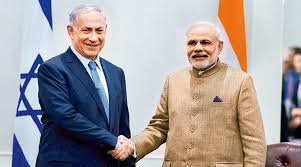
“Next week, the Indian Prime Minister, Narendra Modi will arrive in Israel, This is an historic visit to Israel. In the 70 years of the country`s existence no Indian Prime Minister has ever visited and this is further expression of the State of Israel`s military, economic and diplomatic strength,” Israel Prime Minister Benjamin Netanyahu has […]
Will the GCC Survive?
As is well known, the current crisis in the Gulf Cooperation Council (GCC) was caused by the June 5 decision of Saudi Arabia, United Arab Emirates (UAE), Bahrain, and Egypt, followed later by a few others, to cut off diplomatic relations as well as trade and transport links with Qatar. Well-wishers of the GCC, which had escaped the ravages of what started as the Arab Spring in 2011, have reason to be deeply disappointed.
The crisis is getting worse by the day primarily for two reasons. First, Qatar’s adversaries seem determined to punish it whatever be the cost thereof in terms of regional stability, peace, and the suffering caused to people in the GCC and elsewhere. Second, Washington, which alone has the clout to intervene and, if need be, impose a settlement in its own interest, appears to be incapable of coherent and rational action under President Trump who has signalled a policy contradicting that of his own Secretaries of State and Defense. Without indulging in untenable counterfactual thinking, anyone could have seen that had Obama been in the White House, Secretary Kerry would have undertaken shuttle diplomacy and ended the current crisis within days. That such a settlement might have been cosmetic and that the underlying causes and complaints might have remained is a different matter. In diplomacy, one is not always looking for a permanent cure. The first priority is to put out the raging fire.
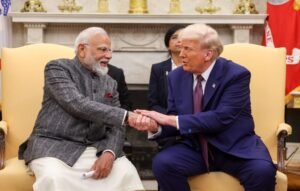
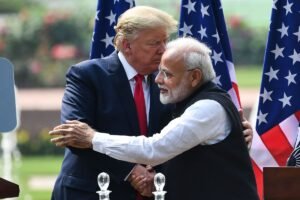
A Forecast of the Modi-Trump Meeting
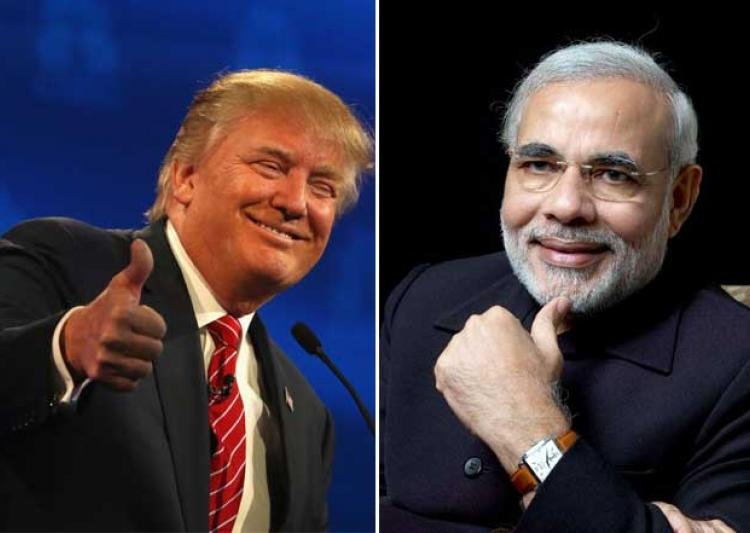
This is not because of the absence of any outstanding issues between the two countries. There are a number of areas of mutual interest and common concern. These include advancing defence and strategic cooperation, trade surplus/deficit, international terrorism – issues on which Trump has expressed strong opinions in the past, although not specifically with respect to India-US relations.
The environment in In contrast to Prime Minister Modi’s previous visit to Washington for meeting President Obama, which was high profile in character with lots of advance publicity and hype, his forthcoming trip to the US to meet President Trump is being projected as business-like with very little hype. Almost all, if not all, of the analysts’ expectations on the outcome of the meeting are low to modest and not without reason either.
These talks will be held is also different. Earlier, one of the primary motivations for the US to strengthen strategic cooperation was the long-term prospect of India emerging as a major economic and military power and the need for crafting a viable Asian security architecture given the uncertainties about the evolution of China’s long term goals. In contrast, the Trump administration – largely reflecting the President’s ideology – is more concerned with short term results and gains for the US. Hence the US withdrawal from the Paris Convention, abandonment of the TPP, calls for renegotiation of NAFTA, demands on NATO members to increase spending, etc. Given this, the long term projections of India emerging as a major power after a couple of decades is not likely to play a major role in Trump’s approach towards India.