

Partnering an Asian Renaissance
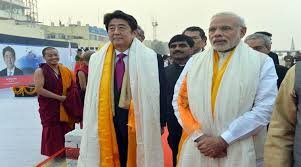
India and Japan have enjoyed a relationship spanning 15 centuries, which has been underpinned by a strong civilizational foundation. The gentle message of Lord Buddha was spread throughout the country by Prince Regent Shoutoku, who used the prestige of the Imperial Court to propagate the ideals, which had emanated from India and which had influenced the whole of Asia from Burma to Japan. Temples and shrines that dot the magnificent Japanese archipelago have images of gods and goddesses like Saraswati and Ganesh and other names familiar to the Indian sub-continent.
Cultural Affinity
In the late 19th and early 20th centuries these ancient links were reinforced by great spiritual leaders such as Rabindranath Tagore and Swami Vivekananda who travelled to Japan and renewed the message of peace and universal brotherhood that had first come to Japanese shores many centuries earlier.
At the political level, the rapid rise of Japan after the Meiji Restoration of 1868 and its transformation into an industrial country, with a powerful army and navy, impressed many political leaders in India who were struggling against British colonialism. The defeat of the powerful Chinese Empire in 1895 and of Russia, the largest European empire in 1905, at the hands of the Japanese, had a profound effect on national movements in India, Burma, Vietnam and Indonesia. The Indian National Congress split between activists who espoused emulation of Japan and those who preferred more constitutional methods of struggle. Similar struggles at the ideological level emerged under Phan Boi Chau in Vietnam, Sukarno in Indonesia and Aung San in Burma; all these leaders favoured following the Japanese example of using military force.
Journey to Middle East bare Trump’s contradictions
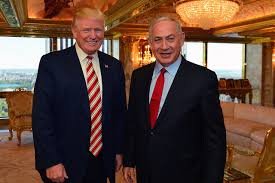
US administration has US President Donald Trump’s first foreign visit after assuming charge to Saudi Arabia, Israel and others countries from May 20 to May 27 is in fact an attempt to score some brownie points on the foreign policy front to shore up his popularity and credibility back home.
The new been working for some months now to accelerate the Middle East peace process to find a lasting solution to Israel-Palestine problem that has been festering for over decades. Trump’s son-in-law and senior advisor Jared Kushner has been working for months in the region meeting Israeli, Arab and Palestinian leaders to find ways to give boost to the peace process.
For this, Trump made himself ready to swallow his own words!
What the US 45th President said on the Saudi soil while addressing the 50-nations summit of Muslim leaders was just the opposite of what he has been saying during the presidential campaign and thereafter. Almost immediately taking over the US presidency, he even went to the extent of issuing an executive order banning people from seven Muslim-majority countries from coming to America.
China’s Belt and Road Forum: Should India get back on board?
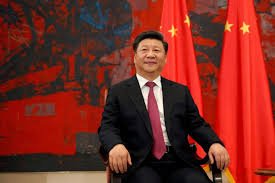
Delivering a keynote address to a mammoth gathering of 1500 people, that included 29 heads of the states and officials, entrepreneurs, financiers, academicians and journalists from over 130 countries including figures such as Russian President Vladimir Putin, UN Secretary-General Antonio Guterres, World Bank President Jim Yong Kim, and Managing Director of the International Monetary Fund Christine Lagarde, Chinese president Xi Jinping reminded people of Zhou Enlai’s speech at the Afro-Asian Conference at Bandung in April 1955 that was also represented by the 29 heads of the states. If India was the prime mover of the conference in Bandung, China is in the driver’s seat as far as the Belt and Road Forum is concerned, and India is conspicuously absent after it boycotted the Forum on the pretext of sovereignty.
The Silk Road spirit
In his address, Xi Jinping said “China’s construction of the Belt and Road Initiative is not to make a new start, but to connect development strategies of different countries and complement each other’s advantages … China is willing to share its development experience with all the rest of the world, but we will not intervene into other nation’s internal affairs, export our social system and development model, nor force others to accept them.” Reiterating the ‘Silk Road Spirit’, the Chinese president said, “Spanning thousands of miles and years, the ancient silk routes embody the spirit of peace and cooperation, openness and inclusiveness, mutual learning and mutual benefit.” Reassuring the gathering of China’s ‘peaceful rise’, he said, “We will not follow the old way of geopolitical games during the push for the Belt and Road Initiative, but create a new model of win-win and cooperation. It will not form a small group undermining stability, but is set to build a big family with harmonious co-existence.”
If at Bandung, Zhou Enlai was successful in smashing the international blockade by seeking commonalities between the nations, in Beijing Xi Jinping has been successful in smashing protectionism and convincing the nations about common development, the globalisation with Chinese characteristics, and even common security. In order to bulldoze the $1.4trillion ‘project of the century’, Xi Jinping pledged $14.49 billion more to the existing $40 billion Silk Road Fund founded in late 2014.The Development Bank of China and the Export-Import Bank of China has pledged to inject $124 billion in the Belt and Road Initiative to support infrastructure, financing and industrial capacity. This is understandable as China’s trade volume and investment with the Belt and Road Initiative countries in 2016, exceeded $3 trillion and $50billion respectively.
India plays balancing game again: Why Palestinian President was in Delhi
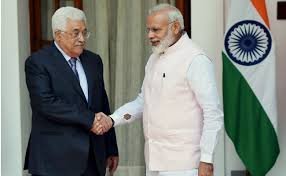
Palestinian President Mahmoud Abbas’s four-day state visit took place at a time when the government of Prime Minister Narendra Modi is breaking new grounds in the realm of country’s foreign policy.
Modi reconfirmed to Abbas after talks India’s unwavering support to the Palestinian cause. India hopes “to see the realization of a sovereign, independent, united and viable Palestine, co-existing peacefully with Israel”, the prime minister said in his statement.
The two leaders agreed that India and Palestine, through practical cooperation, will work together to build Palestine’s economy and contribute to improving the lives of its people. “We will continue to support the skill development and capacity-building efforts of Palestine”, Modi said.
Five agreements, including in the area of information technology, electronics, agriculture, health,youth affairs and sports, including Yoga,were signed between two sides in the presence of two leaders.
Belt & Road: China’s Xi pitches for open trade and shared prosperity, pledges &100 billion more
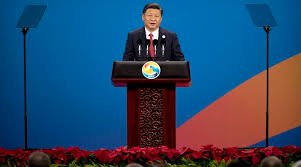
Unveiling his vision of “One Belt, and One Road,” a grand trans-regional connectivity project that seeks to link the four continents and encompass over 65 countries, China’s President Xi Jinping has made a robust pitch in the Chinese capital to the world to cooperate in his dream of shared prosperity.
Addressing the Belt and Road Forum in Beijing on May 14, the Chinese president pledged around US$113 billion in extra funding for OBOR. He said that China’s Silk Road Fund will increase funding by 100 billion yuan, Chinese banks will extend 300 billion yuan in overseas capital, the China Development Bank will pledge 250 billion yuan, and the Export and Import Bank of China will add 130 billion yuan in special loans to Belt and Road projects.
Belt and Road initiative “a project of the century”: Xi Jinping
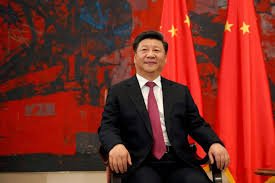
Chinese President Xi Jinping
said Belt and Road initiative focuses on the Asian, European and African countries,
In his opening address outlining China’s vision, Xi referred to ancient Silk Road and spoke about significance of various civilisations, including the “Indus and Ganges civilisations”. Without referring to India’s objections to the China-Pakistan-Economic Corridor (CPEC), Xi said, “all countries should respect each other’s sovereignty, dignity and territorial integrity, each other’s development paths and social systems, and each other’s core interests and major concerns.”
Xi said the Belt and Road initiative is “a project of the century” that will benefit people across the world. Denying any attempts to form a “small group” of nations taking part in the Belt and Road initiative of which CPEC is a part, Xi said China plans to build it as a road to peace and link his country to much of Asia, Europe and Africa
Ways And Means to Choke Maoist Finances
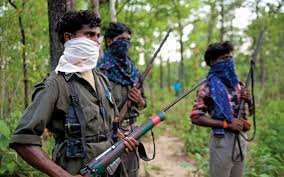
“Effective choking of fund flow to LWE [Left Wing Extremist] groups”, also known as Naxalites, and especially to the Communist Party of India (Maoist), or Maoists in short, was reportedly discussed and emphasised at a review meeting on LWE/Naxalite affected States chaired by the Union Home Minister in New Delhi on May 8, 2017.
It is estimated that the Maoists might be extorting anywhere between Rs 140 to Rs 160 crore annually from a variety of sources. These sources include government works and schemes, industry and businesses, social institutions, infrastructure, people, membership fees, supporters/sympathizers, revolutionary taxes in cash and kind, etc.
Through a consultative process involving various levels, the Central Committee of the CPI (Maoist) fixes the annual amount to be collected at the all-India level. The Zonal Committee appears to be the basic unit responsible for conveying the decision on the amount to be collected from each source. In effect, money is collected at all levels beginning with the Area Committee. In Jharkhand, there have been instances where the source has been informed of the amount to be paid, money left at the source itself, and collected at a later date, as and when the need arose. The Armed Squad need not necessarily go to collect the money. Usually, an over-ground member of the outfit is deputed for this purpose. These could be a member of the Krantikari Kisan Committee, Krantikari Mahila Committee, a contractor or an NGO, or any other designated person. At each level, there is a designated person who may be called treasurer in-charge.
A Defining Moment for France and Europe
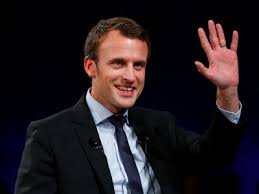
The future of the French Republic and that of Europe in its present form as the European Union (EU) were at stake in the recent French presidential election. Emmanuel Macron and his movement (not a party as yet) have won. With a voter turnout of 75 per cent, Macron gained about 66.6 per cent of the vote in the second round of this election and his rival, Marine Le Pen, got the remainder.
But figures do not tell us the acute anxiety the French people felt at the time of the election. They felt that it was the future of their republic which was at stake. They voted in fair majority for Macron because they thought he stood for the values on which the republic was founded. Some, about 36 per cent, voted for Marine Le Pen because they thought that she stood for the French Nation whose security was threatened by Muslim immigrants settled in France and their ally, the Islamic jihadists.
In Kashmir shadow, India & Turkey join hands against terror, step up trade
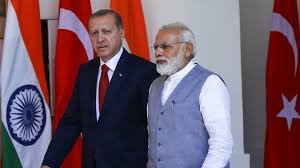
India and Turkey, the two G20 economies, have raised the bar for their economic partnership and agreed to intensify their counter-terror cooperation despite differences over issues like the Kashmir dispute.
As Turkish President Recep Tayyip Erdogan wrapped up his two-day visit to India on May 1, there was a clear-cut resolve to build on convergences, especially in the economic arena, and find ways to bridge differences through sustained dialogue.
Mr Erdogan held talks with Prime Minister Narendra Modi under the shadow of discords in the political relationship between the two countries when the Indian media splashed remarks by the Turkish leader in an interview to a TV channel in which he favoured a multilateral dialogue on the Kashmir issue that went against New Delhi’s consistent stand that the issue can only be resolved bilaterally with Islamabad. In response, India conveyed to Turkey that it is ready to resolve all bilateral issues with Pakistan, including Kashmir, said India’s Ministryof External Affairs spokesman Gopal Bagley when asked to comment on Mr Erdogan’s suggestion of a multilateral dialogue. The spokesperson added that India conveyed its position on Kashmir and stressed that it is essentially a terrorism issue.
With China on mind, fresh fuel to India-Nepal energy ties
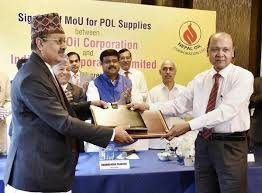
With China at the back of its mind, India has agreed to deepen energy ties by renewing its fuel sale deal with Nepal by another five years and assist the Himalayan country in implementing a cooking gas-for-the-poor scheme akin to the one launched by Prime Minister Narendra Modi in India’s most populous state of Uttar Pradesh.
As per the agreement signed in New Delhi on March 27 by Indian Oil Corp. and Nepal Oil Corp. in the presence of Oil Minister Dharmendra Pradhan and Nepal’s Minister for Supplies Deepak Bohara, the state-owned Indian energy giant will supply about 1.3 million tonnes of fuel every year for the next five years. India has been supplying fuel to Nepal since 1974 under contracts that were periodically renewed. Indian Oil chairman B. Ashok, who was present on the occasion, said the renewed deal is for the period from April 2017 to March 2022 covering petrol, diesel, kerosene, jet fuel and liquified petroleum gas (LPG).