


India snubs Pakistan, says no to SAARC summit
In a major step aimed at isolating Pakistan in the region, India has announced that Prime Minister Narendra Modi will not participate in the SAARC summit in Islamabad due to cross-border terrorist attacks, an obvious reference to the Uri assault by Pakistani terrorists.
In a diplomatic retaliation for Pakistan’s diversionary posturing on the Kashmir issue, India has underlined that the current environment is not conducive to then holding of the SAARC summit.
India, Nigeria open new avenues to energise ties: Focus on nuclear energy, food security
Bolstering their economic and energy partnership, India and Nigeria, Africa’s largest economy, have decided to open new avenues of cooperation in areas of civil nuclear energy, energy, space and food security.
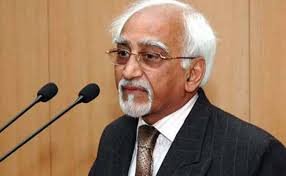
The talks between India’s Vice-President Hamid Ansari and his Nigerian counterpart Yemi Osinbajo in Abuja on September 27 culminated in an ambitious template for scaling up the India-Nigeria relations in key areas that included, among others, hydrocarbons, renewable energy, defence, space and counter-terror cooperation.
US bill to designate Pakistan as a sponsor of terrorism: Boost for India’s anti-terror drive
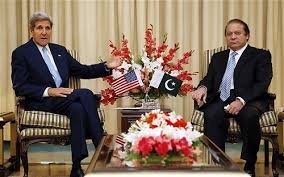
India’s strategy of isolating Pakistan in the aftermath of the Uri terror attack has struck a powerful chord in the US. A day after US Secretary of State John Kerry chastised Pakistan’s Prime Minister Nawaz Sharif and asked him to prevent terrorists from using his country as safe havens, two American legislators introduced a legislation in the US Congress to designate Pakistan as a state sponsor of terrorism.
The bill, H.R 6069 or the Pakistan State Sponsor of Terrorism Designation Act, calls upon the US administration to make a formal assessment on the matter within four months of its passage.
The move to brand Pakistan as a terrorist state is seen as a triumph of Indian diplomacy as External Affairs Minister Sushma Swaraj heads to the US on a concerted drive to corner Pakistan on account of its alleged complicity in the Uri terror attack in north Kashmir, which killed 18 Indian soldiers.
The bill is seen as a huge setback for Mr Sharif as he gears up to make a speech in the UNGA, in which he is expected to highlight India’s alleged human rights abuses in Jammu and Kashmir.
The US’ admonition of Pakistan underscores Washington’s growing wariness with Islamabad’s systematic duplicity on terrorism, and will bolster India’s drive to isolate Pakistan in the international community.
Kashmir terror attack: Building on global solidarity, India gears up to isolate Pakistan
The terror attack on an Army base in Uri in north Kashmir on September 18 has triggered worldwide sympathy and solidarity with India. The attack, which the Indian government believes to be the handiwork of Pakistani militant group Jaish e-Moahmmed and their handlers in the military establishment, has plummeted the India-Pakistan relations to a new low.
As India embarks on a multi-pronged strategy to diplomatically isolate Pakistan in the international arena, New Delhi should leverage expressions of solidarity to press these countries to sanction Pakistan for its brazen use of terrorism as a state policy. The attack has elicited strong condemnation from all P5 countries – permanent members of the UN Security Council – as well as key partners of India, including Japan, Germany and Afghanistan.
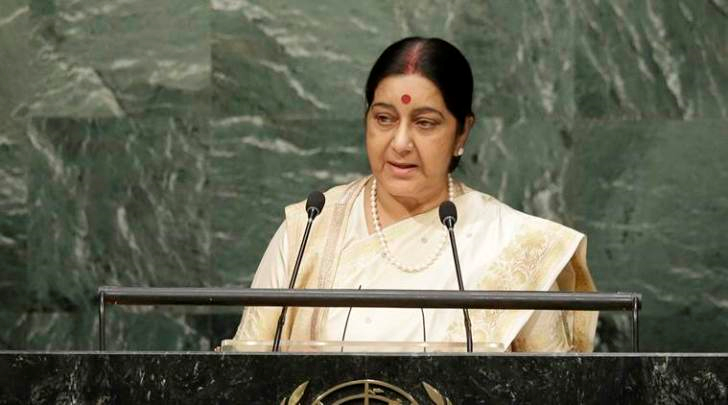
India’s External Affairs Minister Sushma Swaraj is set to highlight Pakistan’s dubious record in exporting terror and exhort the world leaders to go beyond the comfort zone to sanction and penalise this instigator of world terror. Besides speaking at the UNGA on September 26, Ms Swaraj is also expected to meet her counterparts from several countries and seek their support for countering Pakistan-origin terrorism.
World rallies behind India: Highlights
Here is a brief summary of reactions from key world capitals on the Uri terror attack:
Why PM’s Modi visit to Vietnam matters & Why China will be watching
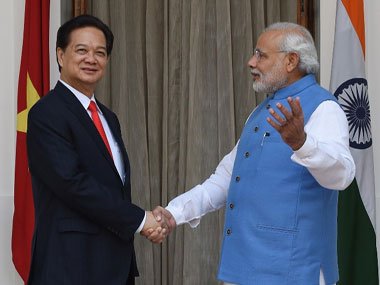
With China closely watching amid the ongoing ferment in the South China Sea, Prime Minister Narendra Modi will head to Vietnam, the first stop of his extended overseas trip which will impart a greater strategic traction to India’s Act East policy at the dual ASEAN and EAS summits in Laos.
The importance of Mr Modi’s maiden visit to Vietnam, an emerging ASEAN economy and a crucial plank in the maritime stability in the region, can’t be overstated. Over the years, Vietnam has morphed into a trusted strategy ally of India due to a host of reasons, with China’s assertive posturing in South China Sea driving the two countries in a closer embrace.
PM Modi’s visit to Vietnam will put the spotlight on an intersection of India’s Act East Policy and Hanoi’s Act West Policy as they deepen their military and economic partnership. Building upon the ongoing transformation of the defence relationship, one can expect India to play a bigger role in Vietnam’s military modernisation. In the military sphere, there is a convergence of interests and a demand-supply fit which will ensure that the relationship keeps growing.
Moving beyond merely strategic calculations, what imparts an emotional resonance to India-Vietnam relations is deeply felt solidarity and connections of heart and mind, as exemplified in spiritual linkages of Buddhism and the enduring popularity of Indian films among the Vietnamese people. Instead of getting lost in a strategic maze, the two countries are rightfully focusing on enhancing people-to-people bonds through travel, tourism and cultural contacts.
Taking strategy is no excuse for not seeing the country with your own eyes. It’s time to open the unusual door, see more and open new vistas in this mutually invigorating partnership. Read more…
Online Radicalisation: The Example of Burhan Wani
Burhan Muzaffar Wani, a Hizbul Mujahideen commander for South Kashmir, died in an encounter in Bundoora village of Kokernag on July 8, 2016, along with two other militants, Sartaj Ahmad Sheikh and Pervaiz Ahmad Lashkari. Wani’s death has generated unprecedented public hysteria, in keeping with his image as a glamourous, tech savvy, insurgent. The lessons […]
South China Sea Ruling: India Strikes the Right Balance
The verdict on The Philippines’ petition regarding the legality of Chinese claims in the South China Sea was much awaited, given that China had claimed the sea almost in its entirety. The Chinese reaction in the run-up to the award indicated that they were prepared for a verdict that was not likely to be in […]
Building new engines of economic growth, the Chinese way: Premier Li Keqiang
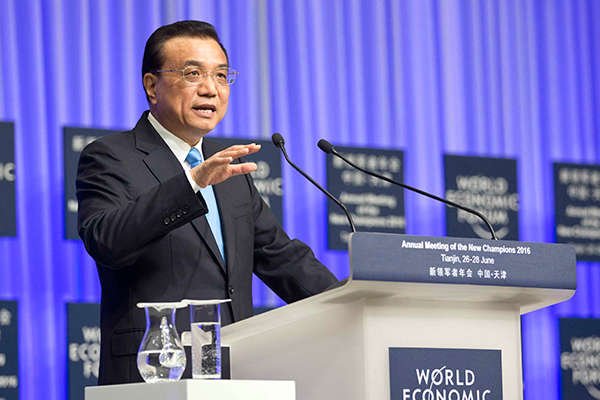
This is the tenth Annual Meeting of the New Champions, or the Summer Davos, as it is known. There is a Chinese saying which goes, “It takes ten years to grow a tree.” If we could compare the Summer Davos to a tree, after ten years of careful nurturing, it has grown into a luxuriant […]
Stopping Illegal Migration from Bangladesh: Need for a Comprehensive Approach
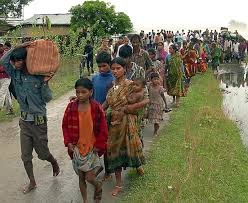
The electoral victory of the Bharatiya Janata Party (BJP) and its allies in Assam has brought the focus back on the issue of illegal immigration. After all, this was one major issue on which the party has come to power. Now that the BJP is in power at both the state and the central level, […]
Attacks on Africans threaten to shadow India-Africa ties
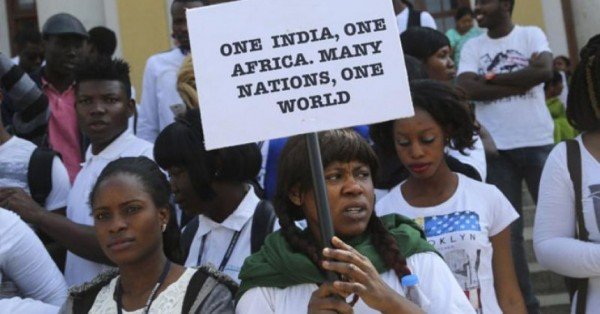
The attacks on African nationals in Delhi and other parts of India has come as a shock to the government which has made Africa an important priority in its foreign policy outreach. The stray incidents of criminality targeting Africans are hogging media headlines, and are threatening to cloud the much-vaunted development partnership between India and […]