

Sheikh Hasina’s visit to India: What to expect
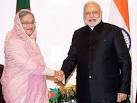
India’s relations with Bangladesh will get a major boost with the visit of Prime Minister Sheikh Hasina to Goa. Sheikh Hasina is visiting India to attend a summit of the BIMSTEC (Bay of Bengal Initiative for Multi-Sectoral Technical and Economic Cooperation) on the sidelines of the BRICS (Brazil, Russia, India, China and South Africa) summit to be held in Goa on October 15-16. Prime Minister Narendra Modi and Sheikh Hasina are expected to hold a bilateral meeting on the sidelines of the dual summits in Goa on October 16.
Sheikh Hasina will be participating in the multilateral forum along with 11 other leaders from BIMSTEC and BRICS countries. Members of BIMSTEC include Bangladesh, Bhutan, India, Myanmar, Nepal, Sri Lanka and Thailand.
India, Russia converge on terror, sign 16 pacts
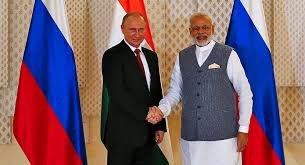
Underscoring the special and unique nature of their relations, India and Russia have signed 16 pacts in diverse areas, including defence, energy, trade and investment and promoting connectivity that are set to provide added heft to this crucial strategic partnership.
Dispelling speculation about drift in bilateral ties, the leaders of the two countries underscored the special and privileged character of the India-Russia strategic partnership.
The meeting between Prime Minister Narendra Modi and Russian President Vladimir Putin at a luxury hotel in Benaulim on October 15 was marked by warmth, mutual trust and a meeting of minds on a wide gamut of issues, including terrorism.
Highlighting convergence between India and Russia on a range of issues, Mr Modi expressed appreciation of Russia’s “unequivocal condemnation” of the cross-border terror attack in Uri on September 18. “Russia’s clear stand on need to combat terrorism mirrors our own. We deeply appreciate Russia’s understanding and support of our actions to fight cross border terrorism that threatens our entire region. We both affirmed the need for zero tolerance in dealing with terrorists and their supporters,” Mr Modi said at a joint media appearance with Russian President Vladimir Putin here.
India hopeful Russia will scale down military ties with Pakistan, big deals on way
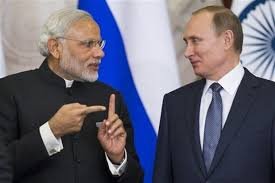
Amid a note of dissonance over the issue of Russia’s joint military drills with Pakistan, India has voiced confidence that Moscow will reflect on New Delhi’s concerns as it unveiled an ambitious multifarious agenda to galvanize the special and privileged strategic partnership between the two countries.
In an attempt to downplay Moscow’s military outreach to Islamabad, India’s ambassador to Russia Pankaj Saran indicated that a specific incident or episode should not be allowed to shadow the India-Russian relationship, which is special in many ways.
“It’s not legitimate to reduce the relationship to what happened a few days ago,” Mr Saran said when asked by India Writes Network on whether the Pakistan-Russia joint exercises have cast a shadow over the so-called special and privileged relationship between New Delhi and Moscow.
“We have conveyed our concerns to the Russian side. We are confident that Russia will reflect on our concerns,” the Indian envoy told reporters at Taj Exotica Hotel, the venue of the 17thIndia-Russia annual summit and the 8th BRICS summit.
China courts Bangladesh with big-ticket deals

China looks set to raise the bar for its ties with Bangladesh by announcing deals and loans worth billions of dollars during Chinese President Xi Jinping’s official visit to Dhaka on October 14. Bangladeshi officials are expecting at least &20 billion package of investment and aid during President Xi’s visit.
The two countries are also expected to sign a Memorandum of Understanding (MoU) on strengthening investment and production capacity. In an issue of concern to India, Mr Xi is also set to launch a charm offensive to win Dhaka’s support for his per project of trans-regional connectivity, ‘One Belt One Road’(OBOR).
US asks Pakistan to act against Hafiz Saeed, supports India’s right to self-defence
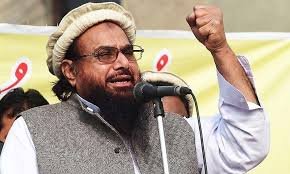
In a boost for India’s drive to expose Pakistan’s role in fomenting terror, the US has launched a blistering attack on terror impresario Hafiz Saeed, the virulently anti-India suspected mastermind of the Mumbai carnage, and endorsed India’s surgical strikes against terror camps in Pakistan-Occupied Kashmir.
Washington’s indictment of Pakistan comes ahead of the BRICS summit in Goa where India will focus on getting the support of emerging powers for pressuring Pakistan to abandoning cross-border terrorism.
The message to Islamabad was clear: stop sheltering terrorists and punish the perpetrators of the 26/11 attacks.
Modi warns Pakistan, calls for slaying ‘Ravana’ of terror
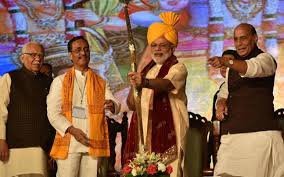
Riding high on the surgical strikes conducted by India’s Special Forces on terror pads in Pakistan-Occupied Kashmir, India’s Prime Minster Narendra Modi’s twenty-minute Dussehra speech in Lucknow focused on terrorism, with a clear warning to Pakistan to stop the export of terror. “Terror is the new target and India will not spare those who shelter and help terrorists,” he said in an obvious reference to the Uri terror strike perpetrated by Pakistan’s terrorists.
RSS chief talks tough on Pakistan, says entire Kashmir is part of India
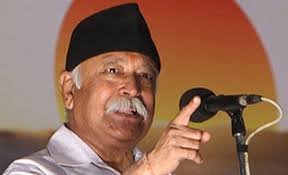
In a strong message to Pakistan, the RSS, the ideological mentor of the ruling Bharatiya Janata Party (BJP), has asserted that the whole of undivided Kashmir, including Mirpur, Muzaffarabad and Gilgit-Baltistan, belongs to India and warned Islamabad against encouraging separatist forces in Jammu and Kashmir.
In a speech at the annual Dussehra rally in Nagpur on October 11, the headquarters of RSS, Rashtriya Swayamsewak Sangh (RSS) chief Mohan Bhagwat backed the government’s surgical strikes against Pakistan and underlined that there is a limit to tolerance. Mr Bhagwat’s remarks reinforced the ruling establishment’s growing exasperation with Islamabad which is resorting to diversionary tactics, rather than addressing India’s concerns over cross-border terrorism.
Hamid Ansari in Mali: Amid Pakistan strikes, India quietly bolsters anti-terror front with Africa
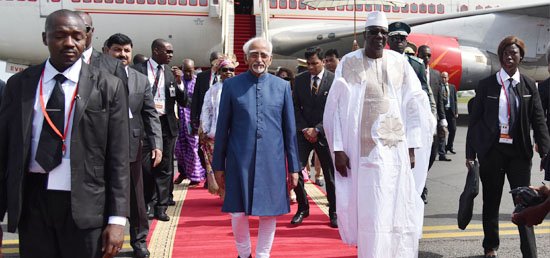
Amid headline-hogging strikes by India to hit back at Pakistan for the Uri massacre, thousands of miles away Vice-President Hamid Ansari engaged in quiet and effective diplomacy to forge a united front against terror with two key West African nations, including Nigeria and Mali. In Bamako, the capital of Mali, the vice-president outlined a template of mutual empowerment with the African continent by dovetailing India’s Africa policy with the vision of African resurgence crystallized in Agenda 2063.
In the first high-level visit from India to Mali, Mr Ansari pledged India’s unremitting support for the reconstruction and flowering of this nation of poets, scholars and musicians and underscored that New Delhi will work closely with Bamako to restore the glory of Timbuktu, which has been savagely assaulted and scarred by al-Qaeda in Maghreb militants.
Ansari backs Mali’s reconstruction: ‘India’s ties with Africa not transactional’
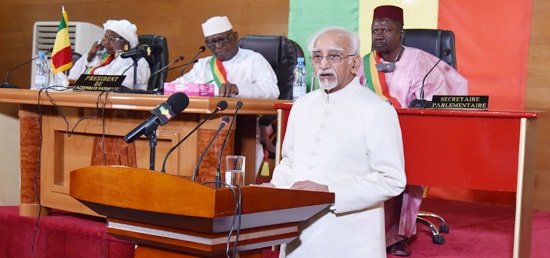
India’s outreach to Francophone Africa has acquired a new ballast with the first high-level visit from New Delhi to the land-locked West African nation, home to scholars, musicians and historians.
India has strongly rallied in solidarity with Mali, the gritty West African nation ravaged by terrorism, but is determined to script its resurgence. In a defining speech at the National Assembly of Mali, Vice-President Hamid Ansari underscored key pillars of the burgeoning India-Africa partnership and pledged India’s unstinting support for the reconstruction of Africa’s seventh largest state. Mr Ansari underlined that India’s relations with Africa go beyond merely transactional partnership, but is rooted in emotive people-to-people connections, political solidarity and an emerging contemporary partnership animated by mutual resurgence. Here are key highlights/excerpts of Vice-President Hamid Ansari’s speech at Mali’s parliament on September 30:
In recent years we have sought to close the distance that separates us physically. We were happy to welcome His Excellency President Ibrahim Boubacar Keïta when he participated in the 3rd India – Africa Forum Summit hosted by India in October last year. We value the contribution of Mali to the success of the Summit.
Walking the talk: India’s surgical strikes on terror pads in Pakistan a fitting response to Uri attack
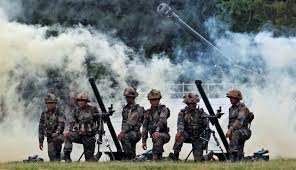
The audacious surgical strikes on seven terror launch pads across the Line of Control (LoC) by India has underscored India’s resolve to punish Pakistan for the Uri terror strike and its continued use of terrorism as an instrument of state policy.
The special operation launched by the Indian Army on the intervening night of September 28 and 29 in a nearly five-hour-long operation to destroy terror camps in Pakistan-occupied Kashmir has been widely welcomed in India and is seen a fitting retaliation for the killing of 18 Indian soldiers in Uri the terror strike.
The surgical strikes have also demonstrated to Pakistan and the world that India is not going to suffer any more Pakistan’s duplicity and nuclear blackmail by deploying techniques it considers necessary for the country’s honour and self-defence.
The details of the special operation are not clear, but reliable sources disclosed that the launch pads in PoK were located in the range of 2 to 3km from the LoC and were under constant surveillance for over a week.